Author Archives: Jilanne Hoffmann

Jilanne Hoffmann's avatar

About Jilanne Hoffmann

Writer, Editor, Children's Book Author www.jilannehoffmann.com www.DogpatchWritersCollective.com

Write on Mamas – New Anthology

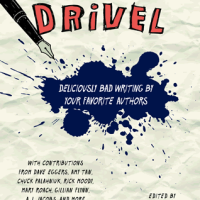
Hello Dogpatchers! I just read this blog post by an editor/writer from a group called Write on Mamas. They are professional writers (and those just beginning their writing journey) in the San Francisco Bay Area and beyond. I think the post contains some valuable insights about “beautiful writing” and what the editor learned while shepherding the group’s first anthology into publication.

So often, a piece can be beautifully written  (crafted) but feel lacking. A loooooo-n-g time ago, I took a poetry workshop and spent a great portion of the time discussing whether certain poems had “duende.” Here’s Wikipedia’s definition of the word:

Duende or tener duende (“having duende”) loosely means having soul, a heightened state of emotion, expression and authenticity, often connected with flamenco[1] The artistic and especially musical term was derived from the duende, a fairy or goblin-like creature in Spanish mythology.

I think this is sometimes the missing element in what would otherwise be called “beautiful writing.” So here’s hoping you are all out there inviting that little fairy goblin into your work.

Link to the blog post:

http://writeonmamas.com/tips-on-editing/

Write on Mamas’ new anthology:

Screen Shot 2014-05-30 at 11.08.47 AM


9 Comments

Filed under Craft

Mindfulness: Raisins and the Writer

Mindfulness is the buzz word, isn’t it? Or is it just because I live in California?

13781357_blog

I attended a yoga class last week. The lesson for the day, including climbing like spiders up the wall, was about mindful eating. Each of us was offered a raisin—yes, singular—and instructed to hold it close to our eyes and observe its wrinkles and crusty sparkles.

3228069_s

Then we smelled it. Essence of sugary, ripe jam.

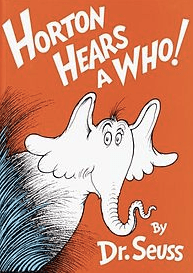
Then we were asked to listen to it. “Horton Hears A Who,” anyone?

Screen Shot 2014-05-07 at 11.03.25 AM

Yes, we listened to those tiny raisin voices as we held them close to our ears and rolled them between our thumbs and forefingers. Mine squeaked.

“Please, I know you’re going to eat me. Can we just get this over with?”

Yoga is a cruel sport, isn’t it?

Finally, we were asked to put those raisins on our tongues and roll them around in our mouths for a full minute before being allowed to chew.

In much less than one minute, I knew I didn’t have the mindful moral fiber it takes to be a true yogi. I wanted to chew that soggy, yet crystalline, drop of zero taste and swallow. Then I wanted to grab a whole handful of those little squeakers, stuff my mouth, and grind away, turning them into a sweet mass of gumminess. That, my friends, is how you get the real flavor of raisins.

The solitary fleck of grit in the universe of my mouth was—

“Chew!” said the instructor. “Chew! Chew! Chew!”

My train had already left the station.

27034388_s

I must remember to do this

Let’s move the focus from my flawed moral character to how “one vs. many” plays out with language. Despite the lovely alliteration, repetition and raisins should not be bedfellows.

A whole handful of examples (adverbs being one) will often not make the experience that much sweeter, richer, or more textured for the reader. It usually achieves the opposite. Instead of strengthening the effect, the writer steeps weak tea. Instead of making the prose rich, the writer sews the empty pockets of a pauper. Instead of making the prose more muscular, the writer births a 98 pound weakling.

Shoot me now before I have to read another cliché in a string of clichés.

The moral of the story is this. Whenever you’re tempted to:

  • create characters whose purpose is redundant (or worse, nonexistent), eliminate or combine two or more characters to achieve the same effect.
  • indulge in repetitive sentences, paragraphs, scenes, and chapters that don’t move the story forward, cut and/or combine.
  • use weak verbs “strengthened” by adverbs, select strong verbs and cut the adverbs.
  • create weak dialogue and surrounding exposition that relies on adverbs (commonly called “two-by-fours”) or repetition to get the point across, take the opposite approach. Dialogue means you’re in scene. Show one single telling detail (not two or three or four) that conveys the essence of the character or character’s reaction, thoughts, or physical trait. Extra points for doing this via dialogue instead of in the exposition used to anchor characters in space.
  • give characters multiple actions that convey the same meaning, select one action that’s unusual to convey the essence of your point.

If there is a critical moment or action that begs repeating for fear your reader won’t “get it,” think and think again and then think some more about whether it’s necessary, or whether it’s a matter of finding a better way to say it once to make it unforgettable for the reader.

And to remind myself of these points when I’m revising, I’m going to breathe and think of:

9866427_s


10 Comments

Filed under Rants

Poetry is the Cruellest Month – Shakespeare’s Birthday

“Such comfort, as do lusty young men feel,
When well-apparell’d April on the heel
Of limping winter treads.” (Romeo & Juliet, Act. I. Sc. 2)
 
25094284_s

The question was never, “To write, or not to write?”

Sonnet XCVIII

From you have I been absent in the spring,
When proud-pied April, dressed in all his trim,
Hath put a spirit of youth in everything,
That heavy Saturn laughed and leaped with him.
Yet nor the lays of birds, nor the sweet smell
Of different flowers in odour and in hue,
Could make me any summer’s story tell,
Or from their proud lap pluck them where they grew:
Nor did I wonder at the lily’s white,
Nor praise the deep vermilion in the rose;
They were but sweet, but figures of delight
Drawn after you, – you pattern of all those.
    Yet seem’d it winter still, and, you away,
    As with your shadow I with these did play.


Sonnet XXIL

My glass shall not persuade me I am old,
So long as youth and thou are of one date;
But when in thee time’s furrows I behold,
Then look I death my days should expiate.
For all that beauty that doth cover thee
Is but the seemly raiment of my heart,
Which in thy breast doth live, as thine in me:
How can I, then, be elder than thou art?
O, therefore, love, be of thyself so wary,
As I, not for myself, but for thee will;
Bearing thy heart, which I will keep so chary
As tender nurse her babe from faring ill.
Presume not on thy heart when mine is slain;
Thou gav’st me mine, not to give back again.
 

Happy Birthday, Shakes!!!


3 Comments

Filed under Howling at the moon

Life and Death and Storytelling


11597720_s

I have reached the age where friends and family members begin to fold their wings and end their buzzing against the windowpane. My parents’ deaths came in the form of old age, and while I miss them terribly, I know they were ready. 

But I don’t feel that same sense of consolation when the one who succumbs has not lived through their 70th decade. 

The other night, I found myself crying at the dinner table after learning that a woman in our neighborhood, with twin boys the age of our son, had died. I knew she had a rare form of cancer. But I also knew she was strong and fierce, maintained a positive outlook, and had been an unstoppable force for good in our community. She was young and smart and beautiful, and I hadn’t allowed myself to believe that she could die.

10774261_s

But she did, and now my grief for her and her family was deepened by my own sense of mortality. I had to face the fact that I, too, could die at any moment. For she was one of US.

So how does death inform the decisions we make? What do we choose to do with the 1,440 minutes we have in the day?

443870_s

What we choose to do shows what is important to us, right?

Hmmm, not so sure. I spent the morning paying bills, but then I suppose that is tangentially important.

But what about dusting? Perhaps it’s important if you’re OCD or if you’re afraid you’ll be judged lacking by your in-laws or dinner guests. What do your characters choose to do with their time? Why do they make those choices?

Death plays a starring role in our lives, whether it’s quietly personal or a catastrophic event. How does this reality leak into your stories? Does death inform your characters’ actions? Do your characters feel immortal, on the brink of death, or somewhere in between?

How would your character choose to die? That “how” carries two meanings, both of which are usually mentioned in an obituary: cause of death, and who was with them when they died. Would your character prefer to die alone? with their dog? surrounded by family? Do they want to live fast and leave a beautiful corpse? Do they wish they could live that way, but something inside them foils those wishes?

Even if there’s nary a wisp of death blowing through your manuscript, it is still a silent partner, affecting your characters’ decisions.

And if it isn’t, shouldn’t it be?

15 Comments

Filed under Craft, Howling at the moon

Death to Backstory – So That My Manuscript May Live

Time is running out! April 2 is the deadline to submit your applications for the Squaw Valley Writers Workshop. So finish scrubbing that manuscript and hit the “submit” button now!

Screen Shot 2014-03-26 at 10.15.37 AM

I’ve been revising two stories and trying to decide which one to submit. Laurel helped me make the decision, and for that I’m forever grateful! But before I send it, she suggested I remove almost all of the backstory.

I’d sent an earlier version to Zoetrope ages ago, and I’d received a hand written note on the form rejection letter that said something like: “You’ve created a couple of memorable characters, but you should rethink how much of this story needs to be on the page.”

10088017_s

Say what?!

Ok, so it finally sank in when the news came from Laurel, my trusted colleague. I pulled out my book, The Artful Edit, by Susan Bell, and then read my story as if I were encountering it for the first time. I took out some backstory, and then read it again.

The story wasn’t missing anything. In fact, it read better, tighter. It killed me, but I cut some more. And then I read it again.

The story didn’t miss those cuts, either. In fact, it read cleaner, meaner. It killed me, but I cut some more…

Before I started this process, the story ran about 6,200 words. For the Squaw submission, I had revised it down to about 5,000 (max word count allowed) before giving it to Laurel to read . After her comments, I cut another 1,200 words. For those who love math, my story lost nearly 40% of its weight in excess fat—

9859643_s

but it could probably lose a few more pounds before I ship it off.

Hemingway has famously said: “I always try to write on the principle of the iceberg. There is seven-eighths of it underwater for every part that shows.”

photo credit: 123RF_lightwise

Um, he was right!

But it is sooooo HARD!!! I love my two main characters, because they are so weird and so misguided. I had such fun with their backstory, they just kept getting more and more interesting—to me. I read the story out loud to myself. I thought, can you believe these two? Aren’t they hysterical? How can I cut that?

My iceberg was sitting on top of the water.

8765872_s

Here’s a sample outtake:

Her anger at Charlie had been cubby-holed in that part of her mind where she kept unpleasant thoughts such as her dissatisfaction with her marriage, gruesome murders she’d read about in the Daily Picayune, and repentance for her own sinful acts such as dancing in the living room, her occasional nip of sherry and whatever weakness in her character kept her from successfully reforming her husband. The Lord knew about Elvis’s power over her, and Elvis and the Lord were long acquainted. Whenever she listened to Elvis sing “How Great Thou Art,” she pictured him in heaven, sitting with Jesus at God’s feet. His songs always helped her put things into perspective—or the cubbyhole. All these years, he had been her one true savior—not that he had replaced the Good Lord in her prayers. Like Mary to Catholics, Elvis was an additional comfort to the soul.

But as it turns out, the pain was worth it. The more I cut, the more the cuts were “contained” in what remained.

It's a miracle!!

It’s a miracle!!


12 Comments

Filed under Craft

Writing and the “Personal Brand”

I found some photos while cleaning my office the other day, photos from a l-o-n-g time ago. They were taken during a hike through Sabino Canyon in the Santa Catalina Mountains on the north side of Tucson, Arizona. The canyon contains some spectacular rock formations and a dessert ecosystem where water runs freely during the rains of winter/spring. And it was a fairly secluded place when I lived there. That’s an important detail.

10806096_s

Sabino Canyon in the Sonoran Dessert

I’d show you some of my photos, but they’re not digital, they’re not appropriate for a PG website, and I’m not sure they’re meant for anyone’s eyes but my own.

The photos were taken by a boyfriend, and they were “artistic.” Skin and stone and water and light and shadow.

24031130_s

No skin, but you get the idea

What could be more beautiful? And while they have meaning for me, I’m not sure they would have value for anyone else.

An aside: The top of Sabino Canyon did have the nickname “nipple peak.”

 Screen Shot 2014-03-07 at 12.41.22 PM

I’m not a photographer, and I do not have the ability to step outside myself while viewing the person I once was in the photos that I’m NOT going to show you. In other words, I cannot judge them with any objectivity, so I’m going to stop talking about them now.

But I am a writer, and when I find old work from my youth stuffed in folders or boxes, my editor steps in. Does this piece strike a chord solely with me, or will others find value in it? Is it purely for the confessional, or can it be shaped to create some sort of universal experience?

Can I now step aside and write about an event as if it had happened to someone else? By removing my ego, can I go more deeply into the story or the character and find things I wouldn’t have been able to see had I not stripped my “self” from the work?

Is stripping the “self” from any work really possible? Is “self” stamped all over everything that I have ever written? Does a writer’s work bear a lasting imprint that can never be washed away? Do we want to wash the imprint away? Do the best pieces of writing contain that indelible imprint?

20338522_s

Is the idea to strip the writing of self when writing while at the same time making sure the writing contains the self that becomes the lasting imprint? And does any of this happen consciously?

I guess I’m just one half of a pair of crows today, the question woman. The answer woman has gone missing. Maybe she flew south for the winter.

That’s it for today, folks. I used up all my energy writing not-so-pithy sayings to fill 600 fortune cookies for our school’s auction tomorrow. “Good fortune comes to those who support the library fund-a-need. Give generously.” Uninspired, and not really a fortune, but to the point, yes? If you’ve got any better suggestions for fortunes—or questions, or answers to questions, I’m all ears.

6379132_s

I’m listening

5 Comments

Filed under Howling at the moon

For Real?

Someone I know lost a very close friend this past weekend. He was only 43 years old and left behind a wife (the love of his life) and two kids, one a 4-yr-old diagnosed a few weeks ago with a rare form of cancer. The child had come home last week from his first round of chemo and a follow-up stay at the hospital, and over the weekend, the father had a massive heart attack in his sleep. In the real world, this is tragic. Extraordinarily tragic.

In the world of fiction, would a reader believe this story?

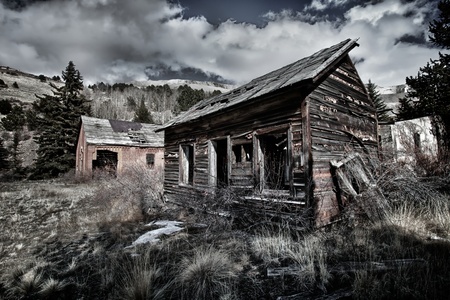
Ever had someone read your work and say “I don’t believe it happened that way”? I have. And that means I didn’t do a solid job of constructing the fictional dream that draws the “buy in” from readers. I put on the hard hat and built the house with some old rotten planks I found lying around, ones that had seen better days, but it’s a house, right? For some people, the structure may hold, but many will find the whole thing too shaky to be willing to walk through the door.
10294921_s

I wouldn’t go in there

And it doesn’t matter that it really happened if you can’t make the reader believe it, right?

I just came back from a writing conference where John Gardner, the author of “The Art of Fiction,” got slammed once again. But it’s funny how everyone objects to the “voice” in that book—he’s soooo snotty!!—but few ever refute his points. On page 22, where he explains how to get buy-in, he categorizes three types of writing:

1) The realistic writer makes events convincing through verisimilitude, real world, real details, real responses. This is Alice Munro’s bailiwick.

2) The tale teller writing of ghosts, shape-shifters, or characters who may never sleep depends on confidence and authority, the “quality of voice” to charm the reader or distract the “critical intelligence,” what Coleridge called “the willing suspension of disbelief.” I’m thinking right now of a recent read called The Demonologist by Andrew Pyper. The narrator’s voice begins powerfully and stays strong throughout the story, and he’s also a master of the “telling detail.”

3) The yarn writer, the one whose lies are so outrageous and entertaining that the reader is pulled along by the brilliance of the falsehood. This one is easy. Think Mark Twain.

Gardner goes on to explain that all three types of writing depend on precise detail. Hmmmm, what details? Well, if your character walks into a bar, your reader knows what a bar looks like:

9142047_s

NOOOOO!!!!!! Not that kind of bar! This kind…

13889259_s

Get the point? Fill in the pieces that MUST be known and let the reader fill in the rest of the fictional dream.

If the reader is moved to ask the dreaded question: “Would ____ really have said/done that?” we know the reader has fallen out of the dream and on to the floor.

8788075_s

Ouch!

And readers don’t like such a rude awakening.

Pay attention to what is real, the emotional core of the moment. Write from that center of authority and—yes, I’ll use that overused word—authenticity. So that is craft, right?

Now comes the “other” part of writing.

One of Gardner’s points that often gets glossed over in this “detail” business is that fiction is not meant solely to entertain or distract us from our personal concerns, but “helps us know what we believe, reinforces those qualities that are noblest in us, leads us to feel uneasy about our faults and limitations.”

To do so, we must move beyond craft. Gardner says:

“No amount of intellectual study can determine for the writer what details he (she) should include.” Everything must be chosen “by feeling and intuition. And one of the things he (she) will discover, inevitably, is that the images of death and loss that come to him (her) are not necessarily those we might expect.”

He goes on to suggest that in order to tell the truth, one must empty one’s mind of those images that instantly come to the forefront. Or as Karen Joy Fowler suggests: “I find that if I go with my first ‘gut response,’ it is the easiest, most facile, most seen before image. I have to work harder to figure out what should really happen.”

17472648_s

Keep throwing the darts until you hit the bulls-eye

In The Year of Magical Thinking, Joan Didion describes how her husband died, chatting with her and drinking a cocktail while she prepared dinner.

“I only remember looking up. His left hand was raised and he was slumped motionless. At first I thought he was making a failed joke, an attempt to make the difficulty of the day seem manageable.

I remember saying Don’t do that

When he did not respond my first thought was that he had started to eat and choked…In the kitchen by the telephone I had taped a card with the New York-Presbyterian ambulance numbers. I had not taped the numbers by the telephone because I anticipated a moment like this. I had taped the numbers by the telephone in case someone in the building needed an ambulance.

Someone else.”

The details she selects to describe the event and her specific response—she had difficulty eating for months afterward because the trauma occurred at mealtime—leave the reader with no room for disbelief.

But one more thing: She sets the scene with thoughts that everyone has:

“Confronted with sudden disaster, we all focus on how unremarkable the circumstances were in which the unthinkable occurred, the clear blue sky from which the plane fell, the routine errand that ended on the shoulder with the car in flames…”

Again, we are right there with her. We know this happens.

But how do you find that magical intuition that knows what details are necessary for the story? Spin a sticky web, and go to sleep. See what you’ve caught in the morning?

8272450_s

If that doesn’t work, try practice. Just like meditation, you’ve got to show up and do the work of emptying your mind before you fill it up. Think “Zen mind, beginner’s mind.”

So when a young father with a child who’s just been diagnosed with a rare form of cancer shows up in your fictional world, find the details that only you can provide, the ones that “make it real” for you.

4 Comments

Filed under Rants

Thoughtful Readers/Reviewers

I’ve been reading Fiction Fan’s book review blog for quite some time, but a recent post piqued my curiosity about why she found a particular novel wanting. For those only interested in writing “literary fiction,” I believe the discussion here is instructive for all writers despite the genre.

I asked in my comment:

Since it didn’t work this time (sounds like the subplots detracted from the tension), I’m curious to hear about when you think it does work for a book to reveal the “what” or “who” and then discover the “why” or “how” throughout the rest? Would it have worked without the subplots/length? Are there other flaws (you mentioned implausibility, but sometimes a little of that can be overlooked if the rest of the book receive high marks, yes?) that kept it from being engrossing? I’ve been thinking a lot about this lately since I’m struggling with this issue in my own work.

Her response, as I should have expected, was insightful: Continue reading

Leave a comment

Filed under Craft

Scribbles from Squaw Valley Writers Workshop – part three

So we’ve been wandering through the wilds of Squaw Valley with a variety of writers in my two previous posts and now arrive at a brief conversation about:

Writing from Life

Here lie a few morsels I gleaned from the likes of Alan Cheuse, Lynn Freed, and Greg Spatz:

“Life is a maze. Fiction is orderly.” (Don’t have an attribution for this, but it was one of the three.) The point being that your fiction (based on real life) shouldn’t be a maze for your reader to wander through even if your experience was confusing to you. The process of writing should turn confusion into structured understanding of the mystery that is life. 

“There’s a very narrow path one treads between saints and sinners.” (Cheuse)

13576727_s

Two sides of the same coin?

I think Cheuse’s point resonates with another post about villains by fellow Dogpatcher, Wes Pierce.

“Write about what obsesses you.” (Freed)  If you don’t do this, it will be tough to hang in there for the long haul that is the writing life.  

Freed quoted Anais Nin: “The role of the writer is not to say what we can all say. It’s to say what we cannot say, otherwise.” Yes! Say what cannot be said in the family or at the family reunion. Say what co-workers cannot say to each other. Say what everyone wants to say but can’t. And say it in a way that makes your readers’ toes curl. (in a good way)

I think the most helpful thought from this discussion was uttered by Spatz:

“Write about what has happened to someone else as if it has happened to you, and write about what has happened to you as if it has happened to someone else.”

So often writers are too close to their material because they’ve lived it and can’t write about the experience with enough distance. But the opposite is just as true. Too often writers can’t get far enough inside the experience of someone else to make it feel real. So writers must put on the mask of distance or the skin of proximity when necessary.

I took an intense afternoon workshop called Finding the Story each day with screenwriter Gill Dennis, so I missed some of the panel discussions. But the benefits of taking Gill’s class far outweighed the detriments. I’ll post about his class at a later time. It was transformational. Thank you, Gill!!

Screen Shot 2014-01-08 at 11.36.09 PM

You’re welcome, Jil!

Now we move on to the daily afternoon open reading workshop with Sands Hall, where I scribbled down a couple of notes about POV:

Make sure your narrators are of the right place/age/experience to say and know what they know.

When in scene, the reader should only see what the character’s consciousness sees or hears, especially if the narrator is a child. Then during exposition, you may pull away from the character, perhaps becoming the older, wiser narrator looking back. This allows the reader to see and understand more than what the character/narrator currently sees and understands.

I often think it’s a good idea for the reader to know more than the character does, unless we’re talking about an unreliable narrator. In this situation, the reader often doesn’t know the “real truth” until it’s revealed through other action/character insights later in the story. 

From the morning workshop with Gail Tsukiyama:

When in scene, a character must act, react or be seen suppressing a reaction.

Your protagonist doesn’t have to change in a story, but he/she must be given the opportunity to change.

Know what the specific issues are for each of your characters, but keep the roots below the surface. “Issues” are often related to things like heritage, family background and expectations. Issues often provide conflict that shows the reader just what the character has lost or could lose.

Gail’s awesome quote: “My mother always said, ‘Don’t draw legs on a snake,’

11376405_s

otherwise it becomes a dragon…

meaning: Don’t overwrite. Make one line mean all the world.”

Don’t give the reader the “to-ing and fro-ing.” Readers don’t want to watch your character go from one room to another unless it’s important. Give only the significant details through the eyes of the characters. Manipulate your sentences so they do three things at once.

And finally, so much of a story is “seeding.”

9415044_s

You will often write your way into a story before you really get to know your characters. Then you will need to go back and “seed” the earlier pages with what must happen to make it all work, foreshadowing specific details that reveal more and more about the characters and plot.

Th-th-th-that’s all for now, folks! Stay tuned for the next installment of Scribbles from Squaw!!

7 Comments

Filed under Craft

More Notes From Squaw Valley Writers Workshop

Hope everyone is warm. Just received a note from NASA, saying they’ve identified the coldest place on earth, where temperatures can dip to minus 133.6 degrees F (minus 92 degrees C) on a clear winter night. No, it’s not in the Grinch’s heart. It’s in Continue reading

4 Comments

Filed under Craft