Mindfulness: Raisins and the Writer

Mindfulness is the buzz word, isn’t it? Or is it just because I live in California?

13781357_blog

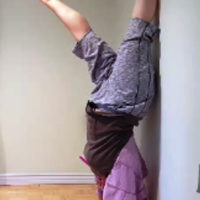
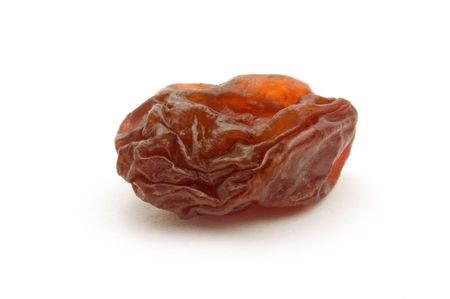
I attended a yoga class last week. The lesson for the day, including climbing like spiders up the wall, was about mindful eating. Each of us was offered a raisin—yes, singular—and instructed to hold it close to our eyes and observe its wrinkles and crusty sparkles.
3228069_s

Then we smelled it. Essence of sugary, ripe jam.

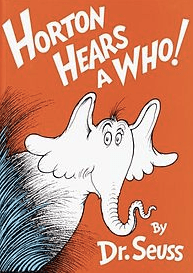
Then we were asked to listen to it. “Horton Hears A Who,” anyone?
Screen Shot 2014-05-07 at 11.03.25 AM

Yes, we listened to those tiny raisin voices as we held them close to our ears and rolled them between our thumbs and forefingers. Mine squeaked.

“Please, I know you’re going to eat me. Can we just get this over with?”

Yoga is a cruel sport, isn’t it?

Finally, we were asked to put those raisins on our tongues and roll them around in our mouths for a full minute before being allowed to chew.

In much less than one minute, I knew I didn’t have the mindful moral fiber it takes to be a true yogi. I wanted to chew that soggy, yet crystalline, drop of zero taste and swallow. Then I wanted to grab a whole handful of those little squeakers, stuff my mouth, and grind away, turning them into a sweet mass of gumminess. That, my friends, is how you get the real flavor of raisins.

The solitary fleck of grit in the universe of my mouth was—

“Chew!” said the instructor. “Chew! Chew! Chew!”

My train had already left the station.

27034388_s

I must remember to do this

Let’s move the focus from my flawed moral character to how “one vs. many” plays out with language. Despite the lovely alliteration, repetition and raisins should not be bedfellows.

A whole handful of examples (adverbs being one) will often not make the experience that much sweeter, richer, or more textured for the reader. It usually achieves the opposite. Instead of strengthening the effect, the writer steeps weak tea. Instead of making the prose rich, the writer sews the empty pockets of a pauper. Instead of making the prose more muscular, the writer births a 98 pound weakling.

Shoot me now before I have to read another cliché in a string of clichés.

The moral of the story is this. Whenever you’re tempted to:

  • create characters whose purpose is redundant (or worse, nonexistent), eliminate or combine two or more characters to achieve the same effect.
  • indulge in repetitive sentences, paragraphs, scenes, and chapters that don’t move the story forward, cut and/or combine.
  • use weak verbs “strengthened” by adverbs, select strong verbs and cut the adverbs.
  • create weak dialogue and surrounding exposition that relies on adverbs (commonly called “two-by-fours”) or repetition to get the point across, take the opposite approach. Dialogue means you’re in scene. Show one single telling detail (not two or three or four) that conveys the essence of the character or character’s reaction, thoughts, or physical trait. Extra points for doing this via dialogue instead of in the exposition used to anchor characters in space.
  • give characters multiple actions that convey the same meaning, select one action that’s unusual to convey the essence of your point.

If there is a critical moment or action that begs repeating for fear your reader won’t “get it,” think and think again and then think some more about whether it’s necessary, or whether it’s a matter of finding a better way to say it once to make it unforgettable for the reader.

And to remind myself of these points when I’m revising, I’m going to breathe and think of:

9866427_s


10 Comments

Filed under Rants

My First Writing Teacher

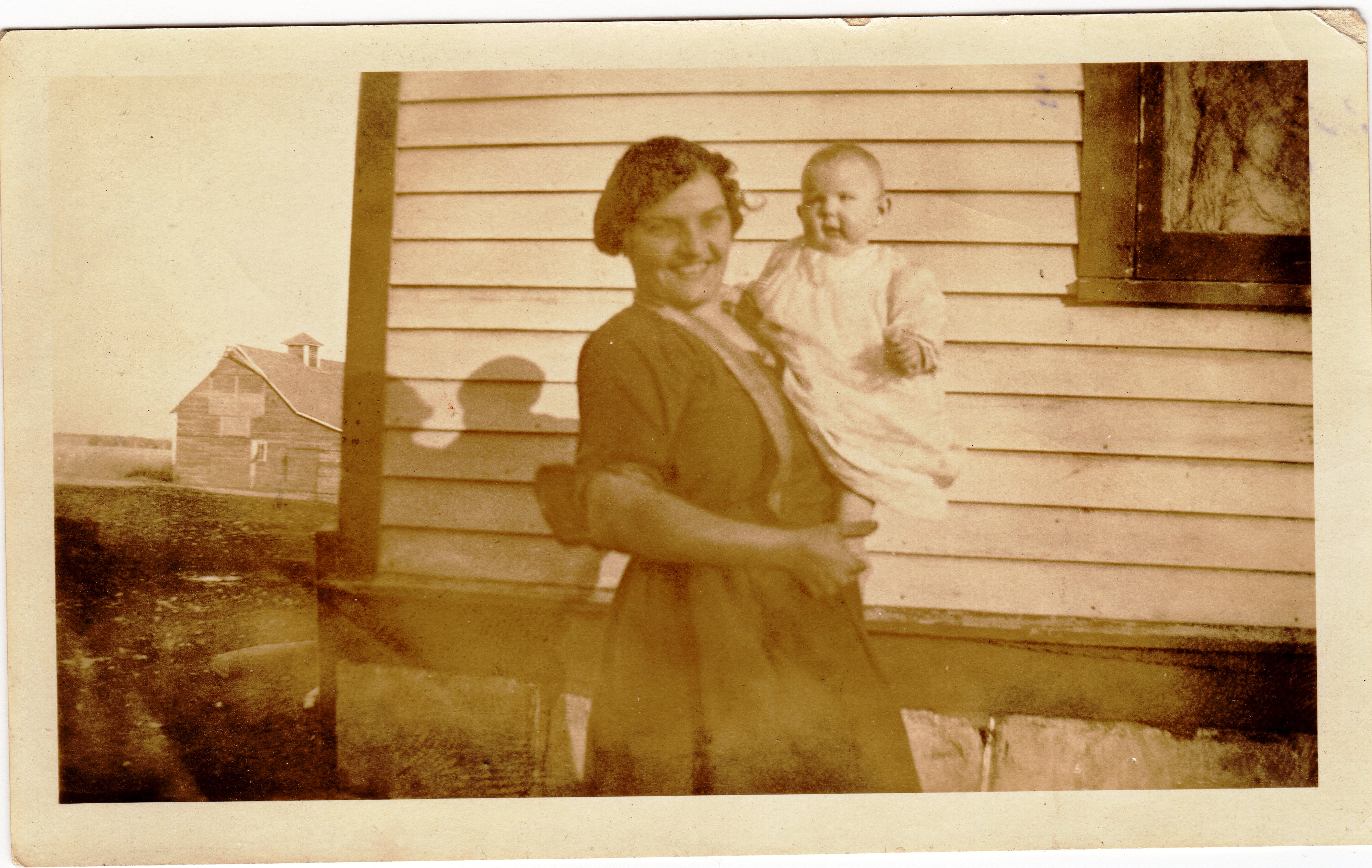
Emma Ann Henning (1894-1977), my grandma, in Detroit Lakes MN

Emma Ann Henning (1894-1977), my grandma, in Detroit Lakes MN in 1935.

Hello from the Dogpatch,

One of my former writing students, Susan Chase Foster, a teacher herself and now a colleague and friend, touched me deeply by nominating me for a Mayor’s Arts Award. Last night, I joined the other recipients in a truly moving ceremony. Our emcees were Bellingham City Council President Cathy Lehman and Bellingham Arts Commission Chair Alexandra Wiley. The event was held at Bellingham’s Walton Theater in the gorgeous Mount Baker Theatre complex, to make it that much more special.

We recipients were asked to talk about our accomplishments, which no one did. I happened to be last, and marveled as person after person got up and turned the spotlight off themselves and onto their mentors, sources of inspiration, and our community. The result was a marvelous feeling of warmth and generosity in the room, and it was heartwarming and humbling to be a part. The recipients were:

Mayor's Arts Awards

Mayor’s Arts Awards Invitation from the City of Bellingham

  • Alan Rhodes – Community Columnist. Satirist extraordinaire, Alan is well known in these parts as, among other things, the Cascadia Weekly columnist on the popular Chuckanut Radio Hour, produced by Chuck and Dee Robinson of Village Books and which received the award last year. We got treated to a snippet of a hilarious Bellingham-centric column Alan wrote a while back, reminding us that all the men in Bellingham are indeed sensitive and all the children recycle.
  • Margaret Bikman – Entertainment News Coordinator. Margaret is the beloved entertainment news coordinator for the Bellingham Herald, curating content for the Herald‘s Take 5 weekly entertainment section, including its calendars, her behind-the-scenes column, and her artist profile.
  • Shannon Laws – Poet. It was a blast to share the podium (and drinks after) with Shannon Laws, author of the book Madrona Grove, whose cover features her own exquisite art.
  • Becky Elmendorf – Former Whatcom Symphony Orchestra President. At one point in telling us the history of the symphony, Becky asked members of the orchestra who were present in the audience to stand up; it was like a fabulous Greek chorus rising in the midst of us.
  • Tore Ofteness – Photographer. Having a wide fan base, Tore was traveling overseas, and there was a collective groan from the audience at not getting to see him!
  • Jack Frymire – Opera Singer and Educator. Truly delightful in all ways, Jack gets props for the best opening line of the night, saying how this award was perfectly timed: not premature and not posthumous.

For me, another wonderful aspect was getting to talk about my grandma, who inspired my writing. I’d thought a lot about her over the last days, and this morning, got up and looked at pictures of her. So here’s my speech from the ceremony, dedicated to my first and best writing teacher ever, my childhood friend and confidante, the best cook in the world, my beautiful grandma.

Young Henning Family

The young Henning family: William and Emma with daughters Maxeen (my mom, holding her dad’s hand) and Irma, on the porch of their Fargo ND home. William was a violinist and a doctor; Emma was a pianist. I visited the family home a few years ago and the delightful family there let me wander all through the house.

My beautiful grandma, Emma Ann Henning, was born in Volga City, Iowa, in 1894. She lived until 1977. In the time that I knew her, she gave me enough love to last a lifetime—and she also gave me stories.

As a little kid, lots of nights I’d sneak into her bed, snuggle up against her big grandma bosoms, and she’d tell me the most wonderful stories. They were stories about everyday people, doing everyday things, but my grandma had a knack for knowing what was funny or unusual or thought-provoking. Her stories were always entertaining, and for me they were also comforting. Whenever I was sick or sad or scared, a dose of Grandma’s stories did the trick.

Grandma with my Aunt Irma, about 1923, at their home in Fargo ND. Little Irma died quite young and this is one of the few pictures I have of her.

Now I realize that in those soft, quiet moments we spent together, she was in many ways teaching me to be a writer. Throughout my life, my way to both entertain and comfort myself has been to make up stories, write them down, and I’m fortunate to now make my living as a writer and editor.

And while it’s extremely gratifying to be part of a book production team or to see my own stories in print, as much as anything, it’s the quieter moments that I treasure the most deeply.

For example, I’ve been delighted to teach creative writing classes for both Whatcom Community College’s and Western Washington University’s Continuing Education programs. I’ve had students from age twelve to ninety-two in my classes, which is wonderful in itself. This particular day, I watched a student who was about twenty-two talking across the table with a student who was about seventy—watching the difference in age become completely immaterial as they talked excitedly to each other about their stories was a quietly special moment. Continue reading

17 Comments

Filed under Pack News

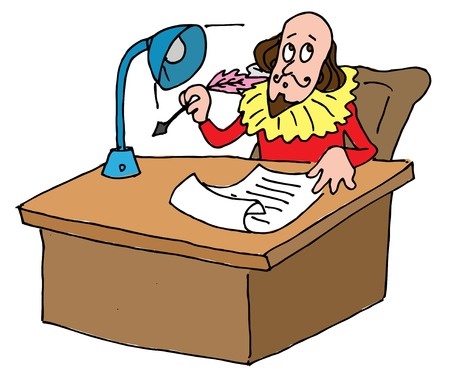
Poetry is the Cruellest Month – Shakespeare’s Birthday

“Such comfort, as do lusty young men feel,
When well-apparell’d April on the heel
Of limping winter treads.” (Romeo & Juliet, Act. I. Sc. 2)
 
25094284_s

The question was never, “To write, or not to write?”

Sonnet XCVIII

From you have I been absent in the spring,
When proud-pied April, dressed in all his trim,
Hath put a spirit of youth in everything,
That heavy Saturn laughed and leaped with him.
Yet nor the lays of birds, nor the sweet smell
Of different flowers in odour and in hue,
Could make me any summer’s story tell,
Or from their proud lap pluck them where they grew:
Nor did I wonder at the lily’s white,
Nor praise the deep vermilion in the rose;
They were but sweet, but figures of delight
Drawn after you, – you pattern of all those.
    Yet seem’d it winter still, and, you away,
    As with your shadow I with these did play.


Sonnet XXIL

My glass shall not persuade me I am old,
So long as youth and thou are of one date;
But when in thee time’s furrows I behold,
Then look I death my days should expiate.
For all that beauty that doth cover thee
Is but the seemly raiment of my heart,
Which in thy breast doth live, as thine in me:
How can I, then, be elder than thou art?
O, therefore, love, be of thyself so wary,
As I, not for myself, but for thee will;
Bearing thy heart, which I will keep so chary
As tender nurse her babe from faring ill.
Presume not on thy heart when mine is slain;
Thou gav’st me mine, not to give back again.
 

Happy Birthday, Shakes!!!


3 Comments

Filed under Howling at the moon

Life and Death and Storytelling


11597720_s

I have reached the age where friends and family members begin to fold their wings and end their buzzing against the windowpane. My parents’ deaths came in the form of old age, and while I miss them terribly, I know they were ready. 

But I don’t feel that same sense of consolation when the one who succumbs has not lived through their 70th decade. 

The other night, I found myself crying at the dinner table after learning that a woman in our neighborhood, with twin boys the age of our son, had died. I knew she had a rare form of cancer. But I also knew she was strong and fierce, maintained a positive outlook, and had been an unstoppable force for good in our community. She was young and smart and beautiful, and I hadn’t allowed myself to believe that she could die.

10774261_s

But she did, and now my grief for her and her family was deepened by my own sense of mortality. I had to face the fact that I, too, could die at any moment. For she was one of US.

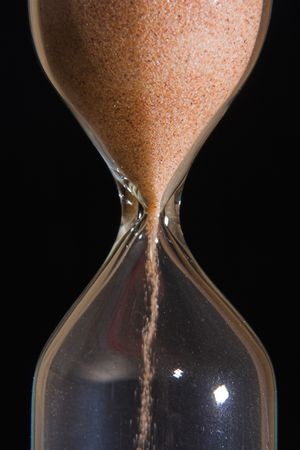
So how does death inform the decisions we make? What do we choose to do with the 1,440 minutes we have in the day?

443870_s

What we choose to do shows what is important to us, right?

Hmmm, not so sure. I spent the morning paying bills, but then I suppose that is tangentially important.

But what about dusting? Perhaps it’s important if you’re OCD or if you’re afraid you’ll be judged lacking by your in-laws or dinner guests. What do your characters choose to do with their time? Why do they make those choices?

Death plays a starring role in our lives, whether it’s quietly personal or a catastrophic event. How does this reality leak into your stories? Does death inform your characters’ actions? Do your characters feel immortal, on the brink of death, or somewhere in between?

How would your character choose to die? That “how” carries two meanings, both of which are usually mentioned in an obituary: cause of death, and who was with them when they died. Would your character prefer to die alone? with their dog? surrounded by family? Do they want to live fast and leave a beautiful corpse? Do they wish they could live that way, but something inside them foils those wishes?

Even if there’s nary a wisp of death blowing through your manuscript, it is still a silent partner, affecting your characters’ decisions.

And if it isn’t, shouldn’t it be?

15 Comments

Filed under Craft, Howling at the moon

Tree Plotting

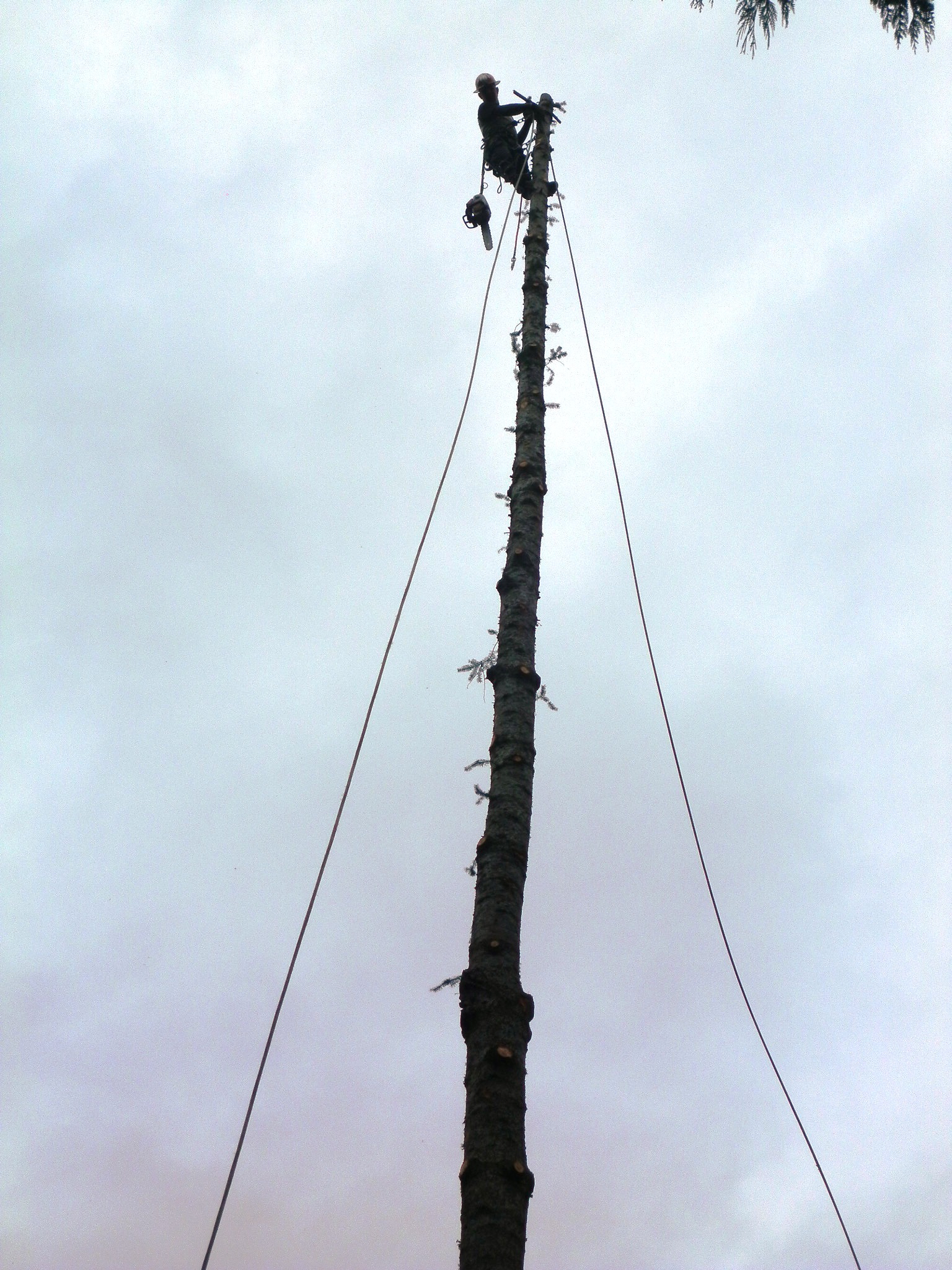
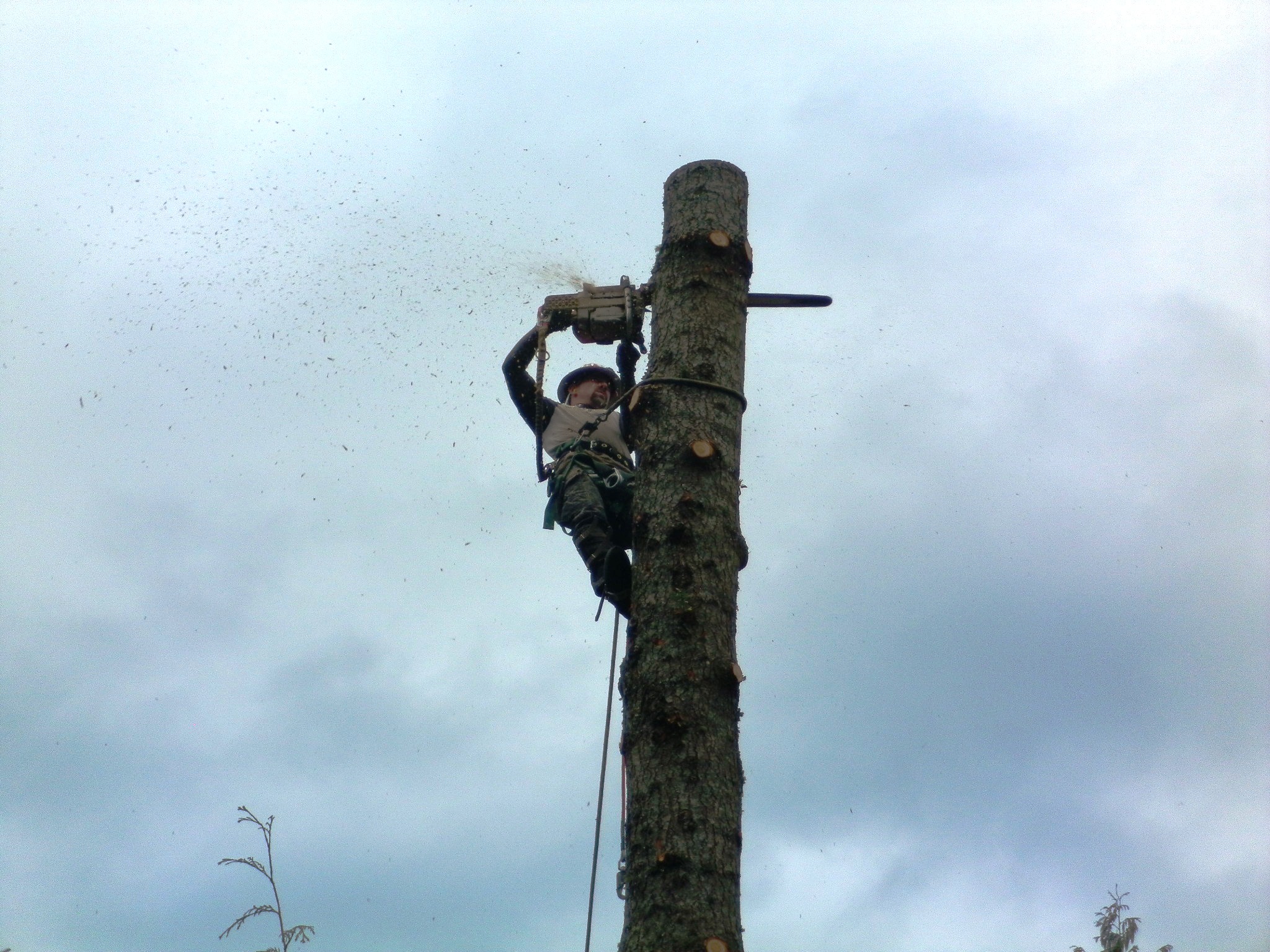
Tree ClimberTree climber. Yep, that’s gonna be my next job.

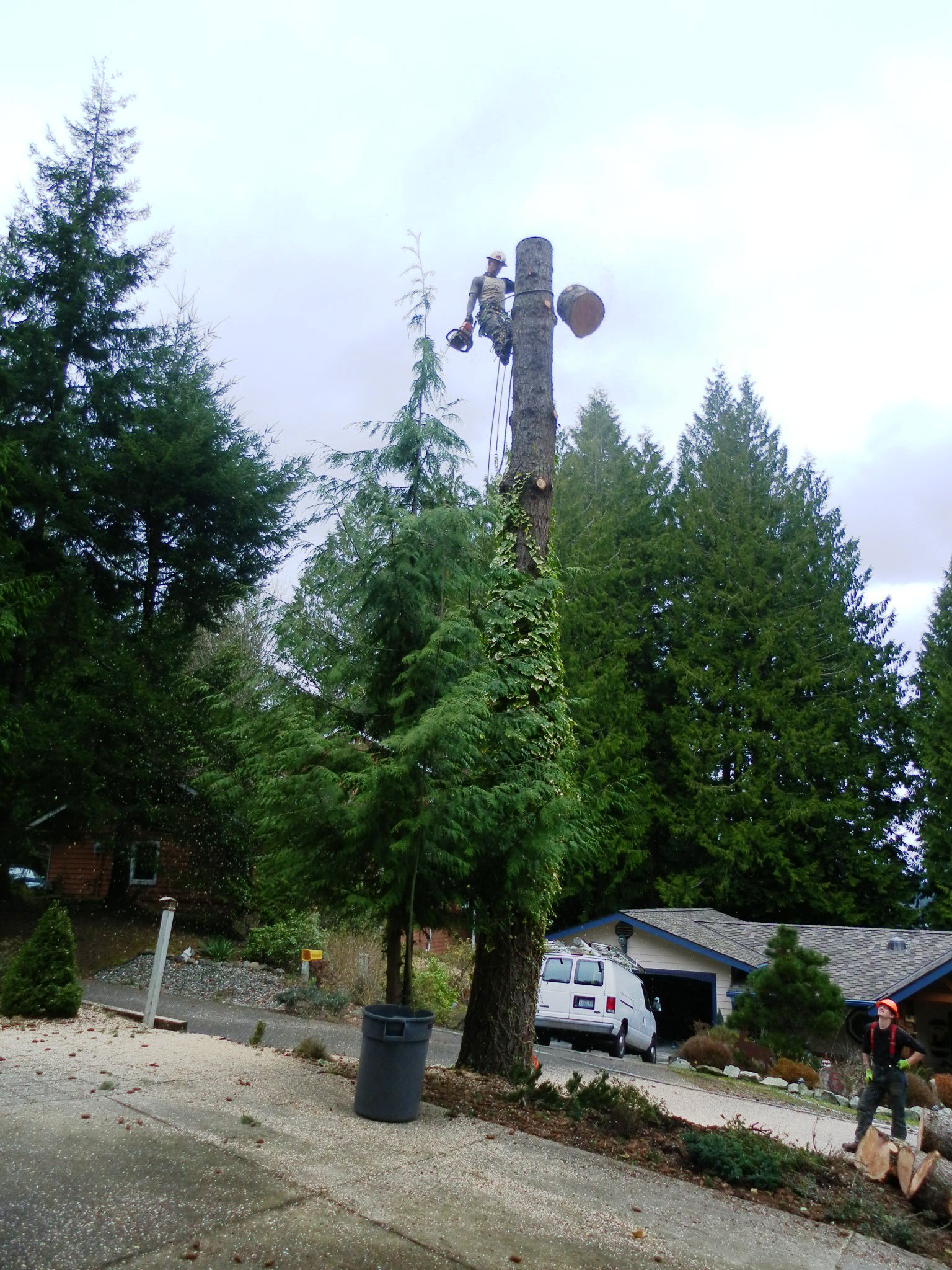
Well, it’s gonna be the next job of a character I’m dreaming up ever since a guy scaled a 100-foot tree in my front yard and chopped it down with a chain saw.

My last job went pretty well – backhoe driver. The pay was great, the foreman wasn’t a bad sort, and I got a date with a hot red head named Mona. Things went great until they didn’t.

Tree CuttingSo I’m excited about this tree climbing gig. I do a lot of research. Take pictures, say “wow, I can’t believe he’s up there so high,” and then deny that any of my interest in the future potential character is at all tied to the general hotness of the tree crew.

I’m still in the creative stage, so it’s important to draw on any and all inspiration, right?

My other excuse is that I’m fifty and can start to blame lots of what I think, do and say on my age. (I reckon it would take about two and a half of them to make my age. So none of the professionals pictured in this story are named, to protect them from me.)

Tree ChoppingLike, thinking I can write about scaling a 100-foot tree with a running chain saw dangling from my belt with any degree of realism.

Isn’t that what we do? Write about stuff we’ve never seen and done, characters we’ve never been or will be, places we’ve never been.

Except for the writers who actually do those things and are those characters and go to those places.

Continue reading

10 Comments

Filed under Howling at the moon

Death to Backstory – So That My Manuscript May Live

Time is running out! April 2 is the deadline to submit your applications for the Squaw Valley Writers Workshop. So finish scrubbing that manuscript and hit the “submit” button now!

Screen Shot 2014-03-26 at 10.15.37 AM

I’ve been revising two stories and trying to decide which one to submit. Laurel helped me make the decision, and for that I’m forever grateful! But before I send it, she suggested I remove almost all of the backstory.

I’d sent an earlier version to Zoetrope ages ago, and I’d received a hand written note on the form rejection letter that said something like: “You’ve created a couple of memorable characters, but you should rethink how much of this story needs to be on the page.”

10088017_s

Say what?!

Ok, so it finally sank in when the news came from Laurel, my trusted colleague. I pulled out my book, The Artful Edit, by Susan Bell, and then read my story as if I were encountering it for the first time. I took out some backstory, and then read it again.

The story wasn’t missing anything. In fact, it read better, tighter. It killed me, but I cut some more. And then I read it again.

The story didn’t miss those cuts, either. In fact, it read cleaner, meaner. It killed me, but I cut some more…

Before I started this process, the story ran about 6,200 words. For the Squaw submission, I had revised it down to about 5,000 (max word count allowed) before giving it to Laurel to read . After her comments, I cut another 1,200 words. For those who love math, my story lost nearly 40% of its weight in excess fat—

9859643_s

but it could probably lose a few more pounds before I ship it off.

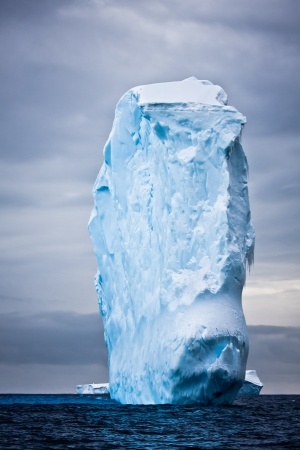
Hemingway has famously said: “I always try to write on the principle of the iceberg. There is seven-eighths of it underwater for every part that shows.”

photo credit: 123RF_lightwise

Um, he was right!

But it is sooooo HARD!!! I love my two main characters, because they are so weird and so misguided. I had such fun with their backstory, they just kept getting more and more interesting—to me. I read the story out loud to myself. I thought, can you believe these two? Aren’t they hysterical? How can I cut that?

My iceberg was sitting on top of the water.

8765872_s

Here’s a sample outtake:

Her anger at Charlie had been cubby-holed in that part of her mind where she kept unpleasant thoughts such as her dissatisfaction with her marriage, gruesome murders she’d read about in the Daily Picayune, and repentance for her own sinful acts such as dancing in the living room, her occasional nip of sherry and whatever weakness in her character kept her from successfully reforming her husband. The Lord knew about Elvis’s power over her, and Elvis and the Lord were long acquainted. Whenever she listened to Elvis sing “How Great Thou Art,” she pictured him in heaven, sitting with Jesus at God’s feet. His songs always helped her put things into perspective—or the cubbyhole. All these years, he had been her one true savior—not that he had replaced the Good Lord in her prayers. Like Mary to Catholics, Elvis was an additional comfort to the soul.

But as it turns out, the pain was worth it. The more I cut, the more the cuts were “contained” in what remained.

It's a miracle!!

It’s a miracle!!


12 Comments

Filed under Craft

Information Management: It’s a Little Like Goldilocks

Hi doggies, I’m so thrilled to be back in the Dogpatch!

As I’ve been entering my revisions for Dream of a City of Ruin (Book II of the Dreams of QaiMaj series), I’ve been thinking a lot about managing information in a novel.

Information is broad word so I’ll define it here as anything that the reader might need to know in order to follow your story. It might be backstory about a character, technical details about how something works, or the description of a setting. Lately I’m thinking the single most difficult part about writing, and the thing that ultimately separates “a book I’d like to read” from “a book I’d like to hurl across the room” is information management.

It’s a little like Goldilocks and the three bears: not too much, not too little. You have to include just the right amount of information for the reader to follow the story, without dumping in too much information, and you have to reveal the information so that the reader isn’t taken out of the story, so that your book doesn’t read like a technical manual, and so that your characters don’t sound like infomercials. It’s easy to fall into the trap of either including rambling, disruptive dumps, or trying to hide important information in a misguided attempt to create suspense, resulting in a lost and confused reader.

While there is no simple answer, I’ve picked up a few tools over the decades, from teachers, mentors, editors, peers and books on writing. For what it’s worth:

1. Kill your darlings, ruthlessly

It’s tempting to get carried away with including information. Chances are you’ve written pages and pages of backstory, world-building, research and character profiles. But just because you are in love with a particular bit of information doesn’t mean that it serves the story. Always ask yourself, does the reader absolutely need to know this particular information right now in order to follow and enjoy the story? If not, omit it. If a piece of information doesn’t either develop character or push the plot forward, we don’t need it.

Readers read fiction when they want a story, not a college textbook. If the reader isn’t already invested in the characters and plot, they aren’t going to care about how the hero’s gamma-ray gun works.

2. Prioritize information in order to determine how to reveal it

In order to understand how and when to reveal information, you have to have a sense of how important the information is to the story as a whole. You’ve likely heard the caveat that a gun on the mantle in Act I must be fired in Act 3. Well, the reverse is true. If something significant happens later in your story, you want to be leading up to it so that your reader is not so surprised by it that the story loses credibility. For example, if the villain is killed in the end by a gamma-ray gun, the reader should know both of the existence of such guns in your story world, and at least a little bit about how they function and how dangerous they are. Obviously, the presence of a weapon is a much more important piece of information than the details about how the fabric of the villain’s cloak was made. (Unless the fabric can teleport the villain, in which case we’d like to know something about it.) But the importance of some details isn’t as clear. So, how do you know what information in your story is going to be important?

3. Tell the story first

Whether you’re discovery drafting, outlining or summarizing, when you’re constructing your story, I’d advise you not to include any information you don’t absolutely need to craft a scene. That paragraph of backstory you think you need in Chapter 1—skip it. Chances are your information priorities will change by the end of your draft. When you tell the story first, you begin to get a sense of what is important and therefore what the reader will need to know, and when.

4. Choose key details: take cues from visual artists

It’s all well and good to wait and add in backstory and technical information later, you say, but what about the details I need to include now in order to build a scene? Character descriptions, setting, etc? I can’t very well wait and add everything in later.

As with backstory, description often falls into the too much or too little categories.  To avoid either pitfall, take a cue from visual artists: when artists paint a picture, they don’t include every single thing their eye actually sees on the canvas. Of course, there are a wide variety of artistic styles, just as there are many different writing voices. A comic artist can tell a whole story with a few squiggly lines. But even the most photo-real painting is an illusion; the artist did not paint, grain for grain, what they saw in the real world. Instead they use lines and contrast to trick the eye into thinking what they are seeing is like the real thing.

In writing, you want to do the same thing. A lot of writers start to describe a character by listing every detail about a person, their height, eye-color, hair color, girth, etc. While it is important for you to know this information about your character, this doesn’t translate in the readers mind to a picture of the character. Instead, pick key details that leave the reader with a solid impression. Visualize what you are about to describe, and then ask yourself, what are three specific images that would best convey this setting or character? Limit yourself to those three impressions, and you won’t overwhelm the reader with information. And speaking of description . . . Continue reading

8 Comments

Filed under Craft

Writing and the “Personal Brand”

I found some photos while cleaning my office the other day, photos from a l-o-n-g time ago. They were taken during a hike through Sabino Canyon in the Santa Catalina Mountains on the north side of Tucson, Arizona. The canyon contains some spectacular rock formations and a dessert ecosystem where water runs freely during the rains of winter/spring. And it was a fairly secluded place when I lived there. That’s an important detail.

10806096_s

Sabino Canyon in the Sonoran Dessert

I’d show you some of my photos, but they’re not digital, they’re not appropriate for a PG website, and I’m not sure they’re meant for anyone’s eyes but my own.

The photos were taken by a boyfriend, and they were “artistic.” Skin and stone and water and light and shadow.

24031130_s

No skin, but you get the idea

What could be more beautiful? And while they have meaning for me, I’m not sure they would have value for anyone else.

An aside: The top of Sabino Canyon did have the nickname “nipple peak.”

 Screen Shot 2014-03-07 at 12.41.22 PM

I’m not a photographer, and I do not have the ability to step outside myself while viewing the person I once was in the photos that I’m NOT going to show you. In other words, I cannot judge them with any objectivity, so I’m going to stop talking about them now.

But I am a writer, and when I find old work from my youth stuffed in folders or boxes, my editor steps in. Does this piece strike a chord solely with me, or will others find value in it? Is it purely for the confessional, or can it be shaped to create some sort of universal experience?

Can I now step aside and write about an event as if it had happened to someone else? By removing my ego, can I go more deeply into the story or the character and find things I wouldn’t have been able to see had I not stripped my “self” from the work?

Is stripping the “self” from any work really possible? Is “self” stamped all over everything that I have ever written? Does a writer’s work bear a lasting imprint that can never be washed away? Do we want to wash the imprint away? Do the best pieces of writing contain that indelible imprint?

20338522_s

Is the idea to strip the writing of self when writing while at the same time making sure the writing contains the self that becomes the lasting imprint? And does any of this happen consciously?

I guess I’m just one half of a pair of crows today, the question woman. The answer woman has gone missing. Maybe she flew south for the winter.

That’s it for today, folks. I used up all my energy writing not-so-pithy sayings to fill 600 fortune cookies for our school’s auction tomorrow. “Good fortune comes to those who support the library fund-a-need. Give generously.” Uninspired, and not really a fortune, but to the point, yes? If you’ve got any better suggestions for fortunes—or questions, or answers to questions, I’m all ears.

6379132_s

I’m listening

5 Comments

Filed under Howling at the moon

Tea with the Gabriels

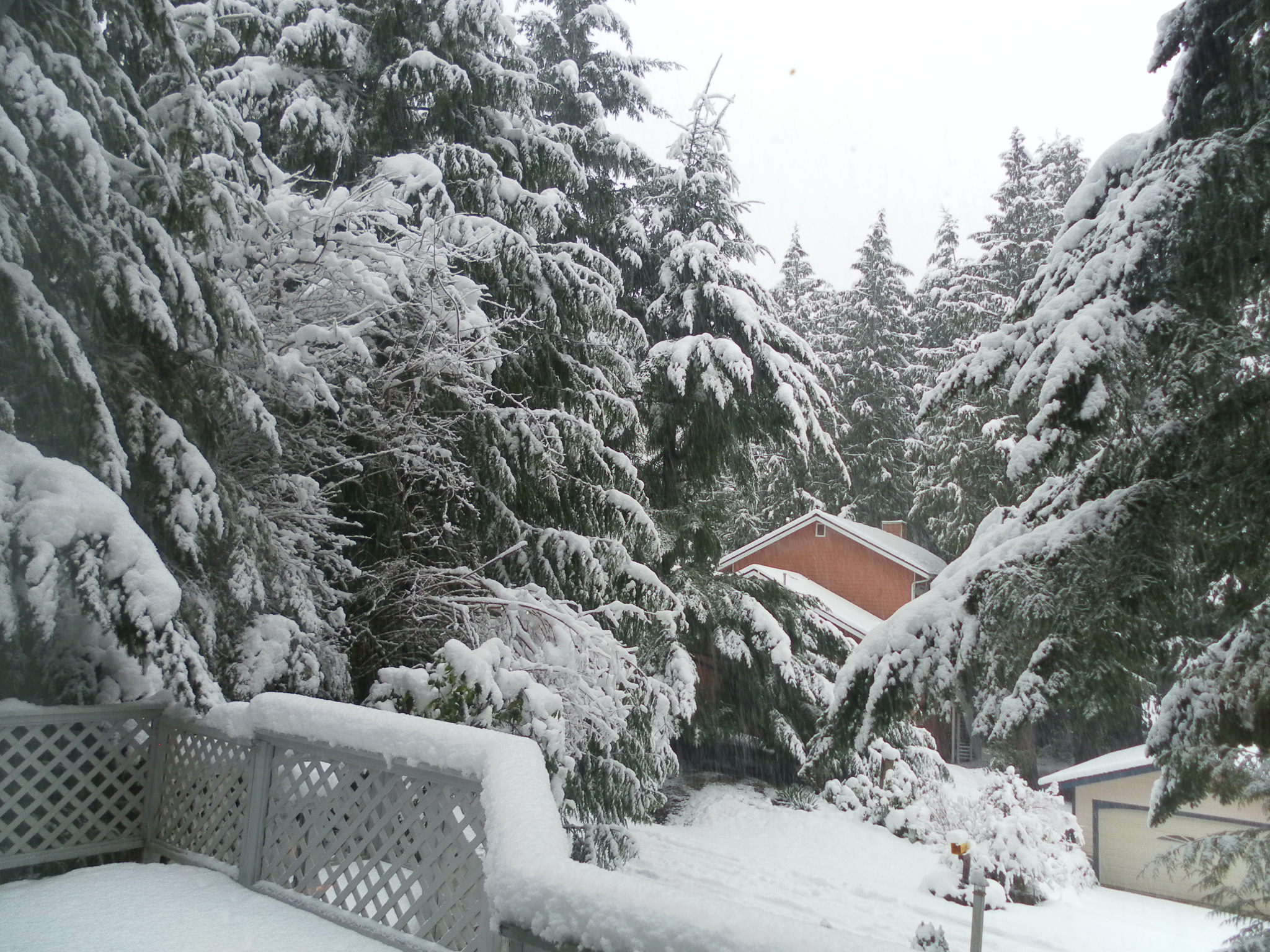
February Snow 1Suddenly, it’s all about the back story:

A) Advise writing students to trim the back story out of the opening of their stories to avoid slowing the action.

B) Write a story that opens with back story and then read it to them.

C) Remind self to preface everything said in class with, “Much of the time.”

February Snow 2And child narrators:

A) Have a bit of luck with a story whose narrator is a child.

B) Write another story whose narrator is a child.

C) That second one isn’t going so well. Maybe there’s too much back story in the opening.

February Snow 3And snow:

It’s been snowing most of the today and was snowing earlier when two teenage boys showed up with matching yellow shovels and offered to shovel my driveway.

The back story:

  • My driveway has a ridiculous hump I’ll never be able to drive up in this weather in the car I now have if the driveway isn’t properly shoveled.
  • Today instead of shoveling said driveway, I was hustling to finish work I should have done on Friday.
  • I didn’t really feel like shoveling my driveway.

These marvelous boys show up and tell me they’ll do the work first and then I can pay them whatever I think is fair. Which of course means I pay them more than I would have negotiated to start. They are smart boys. It takes them a while to finish and I worry they might be getting cold. I have nothing hot for them to drink but tea, which they politely say is just fine. When I invite them in, they stand awkwardly in their snow boots on the entry rug. I tell them to take off their boots and I go upstairs to make tea. I come back down to find them standing in the same spot in their socks, because they are too polite to sit down without being asked.

When I offer, they sit side by side on the couch in my downstairs, look at each other, blow on their tea, look at each other.

“It’s hard to know what to say when you’re in some old lady’s house drinking tea,” I say.

They laugh and then we’re chatting and I hear about school and where they grew up and how they met and became friends. And that they have the same first name. It’s a name longer than Gabriel, and neither of them seems to use a nickname. They’re fifteen or so, and I flash to twenty or thirty years down the road and wonder if they’ll be that friend for each other who’s been a friend for a very long time. I hope so, because it’s good to have that friend. Continue reading

23 Comments

Filed under Howling at the moon

For Real?

Someone I know lost a very close friend this past weekend. He was only 43 years old and left behind a wife (the love of his life) and two kids, one a 4-yr-old diagnosed a few weeks ago with a rare form of cancer. The child had come home last week from his first round of chemo and a follow-up stay at the hospital, and over the weekend, the father had a massive heart attack in his sleep. In the real world, this is tragic. Extraordinarily tragic.

In the world of fiction, would a reader believe this story?

Ever had someone read your work and say “I don’t believe it happened that way”? I have. And that means I didn’t do a solid job of constructing the fictional dream that draws the “buy in” from readers. I put on the hard hat and built the house with some old rotten planks I found lying around, ones that had seen better days, but it’s a house, right? For some people, the structure may hold, but many will find the whole thing too shaky to be willing to walk through the door.

10294921_s

I wouldn’t go in there

And it doesn’t matter that it really happened if you can’t make the reader believe it, right?

I just came back from a writing conference where John Gardner, the author of “The Art of Fiction,” got slammed once again. But it’s funny how everyone objects to the “voice” in that book—he’s soooo snotty!!—but few ever refute his points. On page 22, where he explains how to get buy-in, he categorizes three types of writing:

1) The realistic writer makes events convincing through verisimilitude, real world, real details, real responses. This is Alice Munro’s bailiwick.

2) The tale teller writing of ghosts, shape-shifters, or characters who may never sleep depends on confidence and authority, the “quality of voice” to charm the reader or distract the “critical intelligence,” what Coleridge called “the willing suspension of disbelief.” I’m thinking right now of a recent read called The Demonologist by Andrew Pyper. The narrator’s voice begins powerfully and stays strong throughout the story, and he’s also a master of the “telling detail.”

3) The yarn writer, the one whose lies are so outrageous and entertaining that the reader is pulled along by the brilliance of the falsehood. This one is easy. Think Mark Twain.

Gardner goes on to explain that all three types of writing depend on precise detail. Hmmmm, what details? Well, if your character walks into a bar, your reader knows what a bar looks like:

9142047_s

NOOOOO!!!!!! Not that kind of bar! This kind…

13889259_s

Get the point? Fill in the pieces that MUST be known and let the reader fill in the rest of the fictional dream.

If the reader is moved to ask the dreaded question: “Would ____ really have said/done that?” we know the reader has fallen out of the dream and on to the floor.

8788075_s

Ouch!

And readers don’t like such a rude awakening.

Pay attention to what is real, the emotional core of the moment. Write from that center of authority and—yes, I’ll use that overused word—authenticity. So that is craft, right?

Now comes the “other” part of writing.

One of Gardner’s points that often gets glossed over in this “detail” business is that fiction is not meant solely to entertain or distract us from our personal concerns, but “helps us know what we believe, reinforces those qualities that are noblest in us, leads us to feel uneasy about our faults and limitations.”

To do so, we must move beyond craft. Gardner says:

“No amount of intellectual study can determine for the writer what details he (she) should include.” Everything must be chosen “by feeling and intuition. And one of the things he (she) will discover, inevitably, is that the images of death and loss that come to him (her) are not necessarily those we might expect.”

He goes on to suggest that in order to tell the truth, one must empty one’s mind of those images that instantly come to the forefront. Or as Karen Joy Fowler suggests: “I find that if I go with my first ‘gut response,’ it is the easiest, most facile, most seen before image. I have to work harder to figure out what should really happen.”

17472648_s

Keep throwing the darts until you hit the bulls-eye

In The Year of Magical Thinking, Joan Didion describes how her husband died, chatting with her and drinking a cocktail while she prepared dinner.

“I only remember looking up. His left hand was raised and he was slumped motionless. At first I thought he was making a failed joke, an attempt to make the difficulty of the day seem manageable.

I remember saying Don’t do that

When he did not respond my first thought was that he had started to eat and choked…In the kitchen by the telephone I had taped a card with the New York-Presbyterian ambulance numbers. I had not taped the numbers by the telephone because I anticipated a moment like this. I had taped the numbers by the telephone in case someone in the building needed an ambulance.

Someone else.”

The details she selects to describe the event and her specific response—she had difficulty eating for months afterward because the trauma occurred at mealtime—leave the reader with no room for disbelief.

But one more thing: She sets the scene with thoughts that everyone has:

“Confronted with sudden disaster, we all focus on how unremarkable the circumstances were in which the unthinkable occurred, the clear blue sky from which the plane fell, the routine errand that ended on the shoulder with the car in flames…”

Again, we are right there with her. We know this happens.

But how do you find that magical intuition that knows what details are necessary for the story? Spin a sticky web, and go to sleep. See what you’ve caught in the morning?

8272450_s

If that doesn’t work, try practice. Just like meditation, you’ve got to show up and do the work of emptying your mind before you fill it up. Think “Zen mind, beginner’s mind.”

So when a young father with a child who’s just been diagnosed with a rare form of cancer shows up in your fictional world, find the details that only you can provide, the ones that “make it real” for you.

4 Comments

Filed under Rants