
Author Archives: Dogpatch Writers Collective

What Are You Eating Right Now?


Hello from the Dogpatch! Being Thanksgiving week, we’d like to give thanks for our readers and also let you know what we are . . .
Eating & Reading.
~~~~~
 Laurel Leigh: Having just started doing some work for a publisher of health-related cookbooks, my brain is swirling with low-fat, low-cal, low-cholesterol, low-GI foods not to mention pictures my doc gave me of my own recent colonoscopy. So I’m eating potato chips. I’m so embarrassed, but honesty is the best policy and it wouldn’t be fair to say, while I’m typing in this post right now, that I’m eating eggplant. I did eat eggplant today though, and I put tofu instead of hamburger in the spaghetti sauce I made a couple days ago, and I bought some carrots. So I think I get a few points back. Plus these chips, which are freakin’ good, are zero-cholesterol.
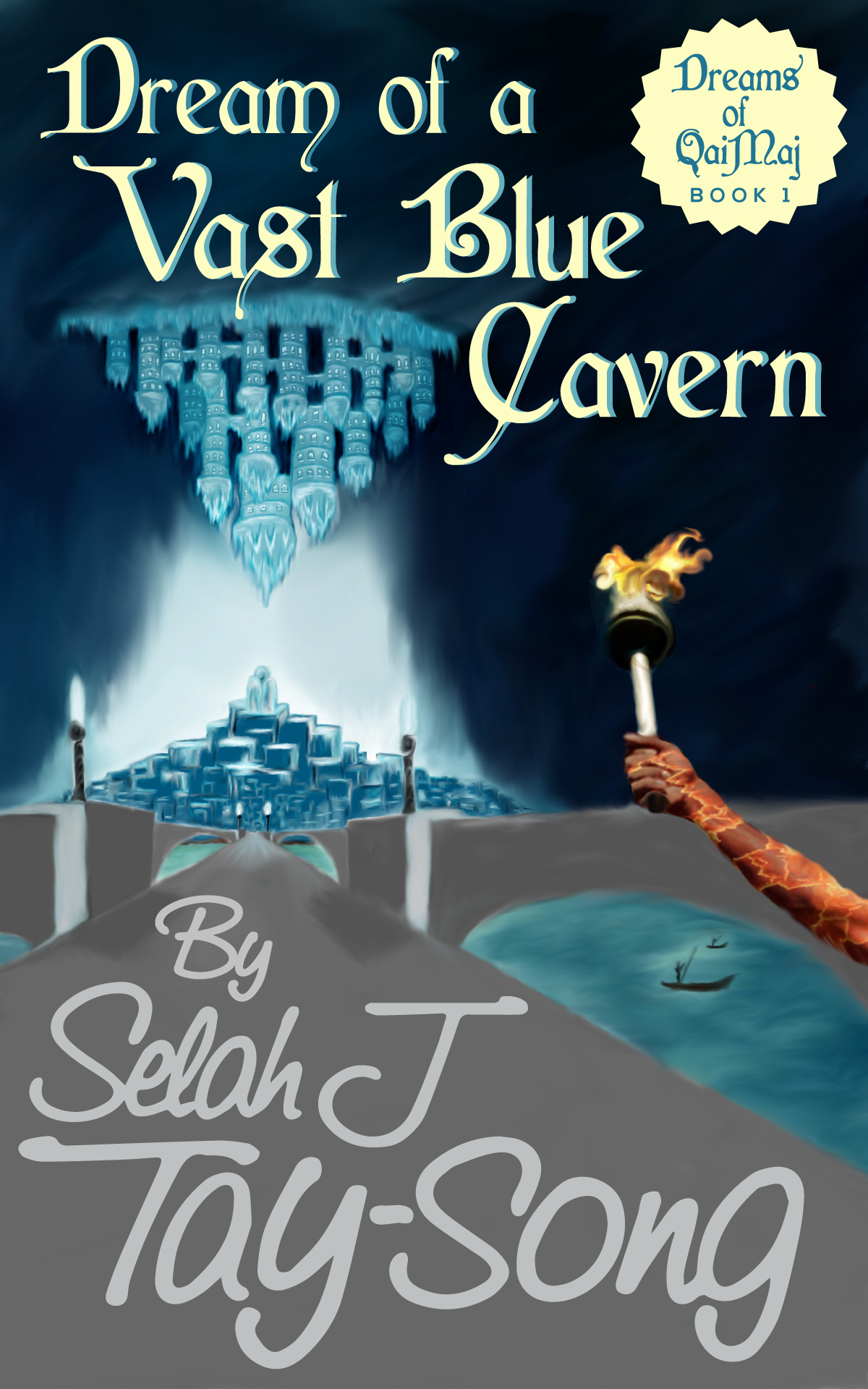
What I’m reading right now is Dream of a Vast Blue Cavern by Selah J. Tay-Song. Since Selah is a Dogpatch blogger, this could seem like a pitch, but I fessed up about the Deep River Original Salted Kettle Cooked Potato Chips in the above paragraph, so you know I’m sticking to the truth today. It’s always so amazing to read a book by someone you know and then forget that you know the writer and just get lost in the story. There’s Stasia, who is an Icer and a Dreamer, meaning she can form stuff out of ice with her mind and dream foretelling visions that are significant for her underground world. This guy Glace, who is dying to hook up with Stasia only he can’t because she’s a princess and he’s her guard, so he has to be all stoic and stuff. But you just know they’re gonna get together at some point. Maybe? The other person in the story I like a lot is Larc, who’s not a very talented ice-molder but she has a great mind for politics and strategy, so she balances out Stasia’s impetuous nature and I think she’s going to factor greatly in what happens during the war that just started. The Icers just got attached by the Flames—they are busy burning through the ice the good guys just used to seal off their city. The cool thing about this book is that I’m not having a hard time believing that Icers and Flames exist. In fact I’m pretty sure they do. This book is just so much fun I know I’m gonna be sorry when it’s over, but the good news is the sequel is on the way. Okay, that last part was a little bit of a pitch, but a well-deserved one.
~~~~~

Jilanne: The Writer’s Shadow
Jilanne: Um, is it my turn? Well, I’m gonna start with the food. We’re having some folks over for a little bird. Oh, yeah, I should first say that NaNoWriMo isn’t going well (whose idea was it to have it in November??), so I’m going to console myself with food. That said, I’ll be making a 15-pounder with gravy (using golden turkey stock made from scratch- look for it on Epicurious), sweet potatoes, Sausage/Cranberry/Cornbread dressing (yeah, ya can’t call it stuffing if it’s not seeing the inside of a bird), and pumpkin pie with Straus Family Farm whipped cream. Oh, and can’t forget Cranberry Jezebel, a recipe from Cooking Light magazine circa Nov/Dec 1994. It contains fresh cranberries, brown and white sugar, horseradish and Dijon mustard. And does it make those sandwiches zing! Friends are bringing a bacon/brussel sprouts dish, mashed potatoes made with smoked paprika, kale salad, and chocolate and apple pies. Oh, and persimmon-chocolate chip bread. Hmmm, did I forget anything? A little pinot noir, a little champagne, a little of this, a little of that. I’m hungry. Gotta finish this post. Continue reading
Filed under Howling at the moon
Listening Hard: The Puzzle of the Writing Workshop
~ Guest post by Wendy Scheir ~
The greatest analyst in the world can live his own life only like an ordinary blind and driven human being.– In the Freud Archives, Janet Malcolm
NYU Film School, circa 1987.
We blink in the dim light of the auditorium, dazed and subdued by the atrocious rough-cut just screened by a fellow student. We are sleep-deprived, beset by a feeling of unreality induced by months working on each other’s insular, chaotic film sets, chain smoking, downing Oreos for dinner, hunching over editing tables. Now we’re showing rough-cuts, itching to get done and out onto the festival circuit—eagerly awaiting our sparkling lives to begin.

The student, Steve (I’ll call him Steve), the one responsible for this mess of a movie, stands up front, face grim and ghostly, peering out at us, his critics.
We’re fidgeting, trying to think up what to say. Someone coughs. Someone fails to stifle a snicker. Finally, a voice rises from front row center.
“Don’t cut a frame.”
The voice belongs to our leader, head of the graduate film school. His words are incisive, his pacing deliberate, his tone soaked in a cocktail of boredom, sarcasm, and the purest disregard. Dick—his name is Dick (really)—says no more.
Steve looks like he’s been punched in the gut. I mean he visibly recoils. His lips quiver. These words, this feeling, will sometimes float to mind even years later, after he has groped his way to a fulfilling career in some distant field.
***
It’s thirty years later, now, and we’re in a thoughtful, sophisticated writing workshop where critiques come in forms more muted, with less intention to do harm. But they can cut as deep.

What to do with these comments?
Let me pause a moment to say that workshops can be wonderful. They can support, nurture, inspire. They can help a writer find her voice. They can furnish insight into the craft of writing and bring kindred souls together.
But even the most generous and intelligent of commentaries may be unconsciously laced with the residue of hidden anxieties, skewed by distraction, pride, envy, disappointment, confusion, self-doubt, even by fear. Very often comments packaged in one form actually mask something else entirely.

Critiques and Critics come in many guises. Here’s a sampling of a few I’ve encountered:
The Befuddled Psychologist
is fascinated but wants to know more. “I wanted to know more about the grandmother!” she cries. Plunge in, she urges, probe deeper. Uncover the motivation, give back story, furnish flashbacks from a traumatic childhood. Above all: Explain! Explain! Explain!
The Stereotypist
believes there’s only one way a person would possibly act. “A mother would never let a swimming teacher push her child into the deep end,” contends this critic. A fireman would never turn and run from a fire. A farmer would never get attached to his cattle. It would just never happen. Continue reading
Filed under Craft
Dogfight: “The Hippocratic Oath” by Jilanne Hoffmann
 Hello from the Dogpatch, and welcome to the dogfight! Here’s a selection from a short story by our own Jilanne Hoffmann, followed by critical yips and yaps. Dogpatch Writers Collective occasionally posts these excerpts of our group critiques of work in progress, and we’d love to know what you think about the excerpt or what we had to say about it.

And, woofs to Jill, who is soon headed to show this story at the prestigious Community of Writers at Squaw Valley!

By the age of eight, I’d seen my share of farm animals give birth and die: chickens, cows, sheep and even a horse. In one memorable birth, Dad had reached in to a cow and tied a rope around the leg of her stuck calf. Then he heaved mightily, pulling the entire heifer out. She and the mother both survived. But when it doesn’t work out and they die, they go silent and still, as if the air in their lungs were the only thing that distinguishes them from stuffed animals with glass eyes.
I knew that this ewe could die, and it was OK since she wasn’t one of our pets; she didn’t have a name. I think its one of the many ways children who are raised on livestock farms learn to cope with the death that surrounds them. If each one were a tragedy, a pet dog or cat, we would have been emotionally paralyzed from early on. As it is, this kind of emotional distance is itself a form of paralysis, one that leaves a certain aspect of the soul a little unreachable but safe. A human survival trait that allows us to function in the face of tragedy. And if we aren’t vigilant, it is a trait that also allows us to kill.
—from “The Hippocratic Oath” Continue reading
Filed under Dogfight
Hellos from The Hague by Cecile’s Writers
Hello from the Dogpatch! We’re jumping out of our skins and very honored to present this guest post from Cecile’s Writers in The Hague—Sofia, Samir, Vanessa, and Cecile—an awesome foursome of bloggers and the editors of the upcoming Cecile’s Writers Magazine, a literary magazine for intercultural writers.
~~~
 In general, the Dutch know and understand a certain level of English. And we’re all very happy to switch to English to make it easier for people who don’t understand Dutch. (Though most never consider the possibility that the other person is trying to learn the language.) Yet even though most Dutch people know English, there aren’t many who write fiction in English.
Luckily, there are a few who do. Editing their stories is an intriguing process. Ungrammatical sentences are easy to spot and to fix. However, there are plenty of sentences that aren’t wrong in the grammatical sense, but still don’t come across as natural. For example, as a teacher I often heard the phrase ‘How late is it?’ instead of ‘What time is it?’ It’s easily corrected, but whether I would change it depends on the voice throughout the story. The structure can reveal much about the origins of the author.
When I write, I try to avoid such sentences, but in the end, I’m not a native English speaker and that will remain evident in my writing. Now, is that a bad thing? It depends. Some people are put off by it. (Usually, these people tend to have heart attacks when they come across spelling mistakes in newspapers, etc.) Others don’t mind. When editing stories written by non-native English speakers, I can correct all those sentences (as far as I recognize them), but that’s not the objective at Cecile’s Writers Magazine. We like to keep the unique voice of the writers provided sentences make grammatical sense.
—Cecile Continue reading
Filed under Craft, Publication
Dogfight: “A Work in Progress” by Wes Pierce

Hello from the Dogpatch, and welcome to the dogfight! Here’s a selection from a short story by Wes Pierce, followed by critical comments. Dogpatch Writers Collective occasionally posts these excerpts of our group critiques of work in progress, and we’d love to know what you think about the excerpt or what we had to say about it.
This story isn’t titled yet. Wes called it “A Work in Progress.” To give you some context, a feckless ranger is assigned to lead a busload of work-release inmates to build fire breaks during the Great Western Fires:
This was when Shoehorn took over. Never in my life had I seen a man handle an instrument the way Shoehorn did an ax, nor take such joy in physical mastery over an object. He would set his initial cut on a downward slope, one clear ringing thwak! burying the head of the ax right up to the handle. With a booted foot he pushed to dislodge the ax-head from the tree; then another thwak! at an upward angle, lower down from the first and right up to the handle again. Finally a third and a fourth stroke to the topmost angle — then a fifth and sixth, maybe a seventh, to the bottommost — and out plopped a hunk of tree the size and shape of a large slice of watermelon. He would do the same to the other side of the trunk, lower down: seldom more than two or three dozen strokes total and the heart of the tree lay exposed and vulnerable. You almost could have pushed the tree down with a good shove of your boot.
Shoehorn was taking down trees twice as fast as any of the rest of us. He was like a machine. Looking again at those arms of his — it seemed now to me that they ended in massive knuckled appendages, hard and shiny from usage, like hooves — made me think of the hydraulic machinery in those old black-and-white movies based in newspaper offices, with their shots of the giant presses churning out the next day’s breaking news in those swirling montages.
And so while the rest of us dug trenches or paired off and went to work with the whipsaws, Shoehorn struck out on his own, taking down the smaller and medium-sized trees in a more or less straight line several hundred feet ahead of us. Since there wasn’t always enough equipment to go around now, there were times when each of us got to rest; which was fine, I guess. But I didn’t feel much like sitting back and watching, for it always had been my unhappy lot in life to sit by and look on, with envy or disbelief, at those guys who knew how to accomplish things with their hands. On a branch above me a squirrel watched too, a small pine cone paused ruminatively before its mouth, while all around us men busily went about their business. Just about my whole life it seemed I had been unwilling poster child for the inadequacies of a Liberal Arts education. I could only stand aside as other guys fixed their own cars, or impressed the girls in our dorm by rewiring a broken washing machine so those luscious young honeys could wash their delicately-soiled underthings, while I watched my t-shirts and jeans and white cotton briefs roll and tumble impotently in a dryer nearby. Continue reading
7 Parenting Lessons From Literature
Hello from the Dogpatch,
Here’s a parenting lesson from 101 Books to which we at the Dogpatch bow down. Major Woofs for this post!

Parenting is hard work. I know that’s a cliche, but it’s a well-earned cliche.
Kids are pretty awesome, and they can even teach you a thing or two about reading, but they also have their moments. That’s why, if you want to be a parent, it’s important to make sure you are not a mental whack job.
Mental whack jobs who are parents usually produce kids who eventually become mental whack jobs themselves. This is not good.
Since fiction is often just a mirror of reality, there’s a lot to learn from literary parents, both good and whack jobbish.
Quite a bit, actually. Let’s take at some parenting tips I put together based on lessons I’ve learned from literary parents.
View original post 663 more words
Filed under Rants
Group Writing Critique: “Holiday Parade” by Lisa Lynne Lewis
Welcome to the dogfight! Dogpatch Writers Collective occasionally posts excerpts of our group critiques of work in progress, and your comments are welcomed! For this round we requested a story from Southern California–based writer Lisa Lynne Lewis (see her bio below). We very much enjoyed reading “Holiday Parade” and give our thanks to Lisa for being part of this forum. This was a particularly interesting endeavor for us, as we all had a slightly different takeaway from the story, which made for a thoughtful as well as enjoyable discussion. You can find more of Lisa’s work at Literary Mama.

From “Holiday Parade”
Emily held her pink-mittened hands over her ears. “Why do they have to do that? It’s so loud!” Debra looked at her daughter, hands still over her ears, her light-brown hair spilling over the fake fur hood of her silver parka. She’d seemed pretty unconcerned about the lockdown when Debra had picked her up after school on Monday. “It was gross when they made the boys pee in the trashcan,” she confided in Debra. “Mitchell and Ben really had to go, but the teacher wouldn’t let them out to go to the boy’s bathroom.” “That is kind of gross,” Debra agreed. “But it was in the corner and she put the flip chart in front of it so we couldn’t see,” Emily added. “So it was OK.”Comments from the Dogpatch:
Thanks for the story, Lisa! Here are my thoughts: This piece is about being safe in the world and the folly of thinking we can be “safe” anywhere. This delusion is and should be owned solely by children. Being a parent, I identify with this theme as my son gets older and loses his innocence. And I see this in action when parents move out of the city to the “safe” suburbs or small town rural areas. It’s a timely topic, given the recent massacre on the East Coast. Continue reading
Dear Dogpatch Readers,
Check out this great discussion from Limebird Writers!

“Description is an opinion about the world. Find a place to stand.” Anne Enright
Sometimes you hear a quote, or a simple of piece of advice, and everything suddenly falls into place. The above quote did that for me. Of course I was aware that descriptions need opinion in order to bring them to life, but it wasn’t until I read that quote that I really internalised what that meant. It isn’t just about adding an opinion to description, it’s about recognising that description IS an opinion.
Whose opinion should it be though? If you are writing a memoir piece, or an article then the opinion can of course be yours, but in fiction it should usually be the opinion of the character whose point of view we are with at the time (although there will be times where it is more appropriate for the opinion to be that of…
View original post 347 more words
Filed under Craft
Pack News
Welcome to another year in the Dogpatch! 2013 marks our fourteenth year as a writing collective and second year as a group blog. Here are some quick updates from members of the Pack:
 Going forward, Eamon will publish on this site under his pen name, Wes Pierce, the name under which he writes and submits.
Laurel Leigh is really happy to be a member of the Dogpatch Writers Collective, which has outlasted her dental work, a couple cars, and most of the pairs of shoes she owns. She invites you to join her at Village Books in Bellingham the last Monday of each month for writers’ open mic. As emcee, it is her mission to make you feel welcome at open mic as well as let you sleep on her sofa if you travel more than 1,000 miles to attend. (Be advised: Her dog may sleep on your feet and snores.) She will again teach Knockout Editing and co-teach Writing Children’s Literature for Western Washington University’s Continuing Education in the spring and will guest teach a Pitching 101 session at the Chuckanut Writers Conference in June.
Jilanne Hoffmann is busy revising a picture book trilogy in preparation for pitching at the SCBWI regional conference (Asilomar) at the beginning of March. She will also be applying for the Squaw Valley Writers Workshop held this year in July. Jilanne has a few other marshmallows browning over the coals; maybe someone will catch them before they fall off the stick and into the fire.
 David Marx will provide updates when he returns from his “fishing” trip.
He’d better come back with a ton of words on the page.
 Dogpatch Writers Collective is seeking occasional guest bloggers to write posts about steering the writing craft. Please reply to this post if you are interested. We will need to know the topic of your proposed post and that you have an active blog.
To all of our readers and fellow writers, thank you for reading and best of luck with your projects in this new year!
—David, Jilanne, Laurel, and “Wes”
Filed under Pack News



















 Dogpatch Writers Collective