
Folks, I cried when I read this, so I’m reblogging from Publishers Weekly. Get out your tissues:
http://blogs.publishersweekly.com/blogs/shelftalker/?p=10803&cpage=2#comment-80676

Folks, I cried when I read this, so I’m reblogging from Publishers Weekly. Get out your tissues:
http://blogs.publishersweekly.com/blogs/shelftalker/?p=10803&cpage=2#comment-80676
Filed under Howling at the moon
Check out the writing analysis in a post by Joe N, a nurse working, living, and writing in Nepal.
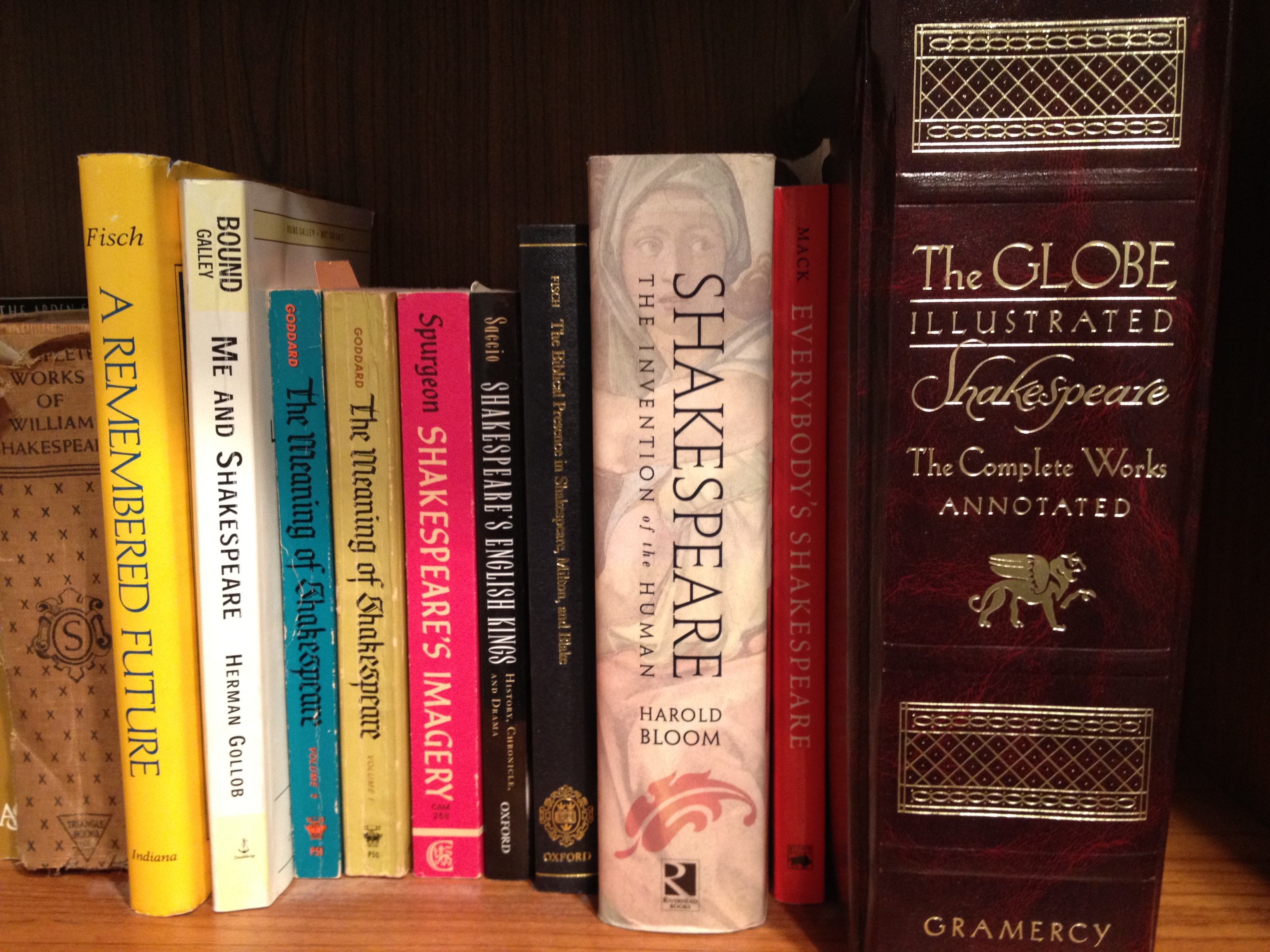
The tool he highlights dovetails nicely with a book I’m reading, Stanley Fish’s “How to Write a Sentence.” It’s an interesting analysis of writing styles, but the tool found in Joe’s post may also use verb selection and placement, sentence length, and vocabulary to make the analysis more complete. Continue reading
Filed under Craft

—Shakespeare
Those “in the know” believe this sonnet was inscribed in a book with blank leaves.
Put it at the top of your own blank page for inspiration.
Happy day after the great Shakes Day!!
Filed under Howling at the moon

Filed under Craft
“…mediocrity destroys the very fabric of a country as surely as a war — ushering in all sorts of banality, ineptitude, corruption and debauchery,” wrote Achebe…
This observation rings true for all societies, not just Nigeria. It’s one that all writers, all artists, all workers should take to heart. Be wary of “good enough.” Be wary of those who disparage learning. Strive for perfection. Although you will never reach that goal, your work will be far better for the struggle. Rest in peace, Mr. Achebe. You have earned it.
Filed under Howling at the moon
The fallacy: “Writing children’s picture books should be as easy as, well, cracking an egg from a long drop.”
This fallacy shares a bed with: “It’s only a few hundred words. I can crank that out in my sleep.”
And there’s another hiding under the covers: “I read picture books when I was a kid, and I’ve read them to kids. That makes me an expert.”
Makes for a pretty crowded bed, eh?
Shortly after stripping the bed and exposing these thoughts to the world, writers begin to mutter, “I didn’t know it would be this difficult.” Continue reading
Filed under Craft
Students of the essay take note: the above post from Café Casey is a lovely take on the learning process, whether it is painting, composing, or writing. Owning and then transforming “influence.”
 I was looking at a picture of bamboo. I love bamboo. I have spent so many hours painting it. In my sumi-e practice, I have painted a million bamboo plants. In the beginning, I thought this was insane repetition. In Western schools you don’t sit and write the letter “e” a million times. Maybe that’s why I always flunked handwriting.
I used to sit and work on the same image or same kanji hundreds of times. Eventually, I learned, it was all the same. To create an image a thousand times is to create it once. Bamboo, chrysanthemum, a cherry blossom–whatever. The goal is to reach perfection. The reality is that perfection doesn’t exist. The perfection is, in fact, in imperfection. Sometimes, our drive to be perfect consumes us. We suffer. Practicing these arts teaches us eventually that the learning–the experience–is in the journey–perfection is just a destination to imagine…
View original post 784 more words
Filed under Craft, Howling at the moon
While I ponder the nature of time, taking the time to find the right word, create the right sentence, and place those right sentences in order until I have a piece that “works”—I am filled with a sense of dread as challenges to write 12 books in 12 months or to write a novel in a month pop up online like prairie dogs. Now I’m not slamming those particular endeavors, no siree. Anyone who can put out that many words deserves respect for their hard work.
And yes, it does light the fire of urgency under writers who are sitting on their thumbs. It gets their hands out from under their butt cheeks and on the keyboard or wrapped around a pen, putting words on the page. But let’s now talk about a little thing like QUALITY. Continue reading
Filed under Craft
I had to re-blog this from 101books.net. It is just too hilarious. Thank you, Robert!
Filed under Rants
| Symptoms | Problem | Solutions |
| Story has unpleasant odor. | Not enough air due to overwrought word choice or compaction.
If there is an odor of ammonia, too much pure crap is standing in the way of the real story. |
Strip the pile of its dense, soggy materials and replace with crisp, crackling prose to soak up excess bulls#!t.
Turn the pile, add fresh material, and move narrative elements around to aerate. Cover pile (put in drawer to rest) until inclement weather subsides. |
| Story is rich and warm only in the center. Failure to build heat/tension. | Pile is too small. Narrative elements are missing.
Insufficient conflict. Not enough air. See first symptom. Lack of nitrogen. Rich material is superficial. Go deeper. |
Make pile bigger. Identify missing narrative elements.
Add water by sticking a garden hose into the center in several locations. Turn the pile to aerate narrative elements. Mix in nitrogen, otherwise known as conflict. Add or remove backstory. Toss and start over!!!! |
| Story temperature exceeds 160°F. | Not enough air, lack of carbon, prose is turning purple. | Turn the pile to aerate.
Mix in 2 parts Hemingway for every one part bad Faulkner. |
| Large, undecomposed items remain in the story even after considerable time has passed. | Ya got some clunkers there. | Read to friends and remove sections that make them grimace.
Shred clunkers before adding new material. |
| In the middle of the night, rodents, coyotes, and raccoons lurk in the shadows near the story, waiting for a chance to raid the juicy bits. | Your prose is attracting aggressive nocturnal elements. | This is usually a sign that the writing is going well. Animal-proof your work area only if this bothers you. |
Filed under Craft










Read more from Jilanne at The Writer's Shadow (JilanneHoffmann.com)

Read more from Laurel Leigh at DearWriters.com













young adult, middle grade, children's books
A topnotch WordPress.com site
The greatest WordPress.com site in all the land!
AS I TOLD THE GIRL THAT I LOST MY VIRGINITY TO, THANKS FOR LAUGHING AT ME HERE TODAY.
Eternal Beauty of Nature
The greatest WordPress.com site in all the land!
Perfection is next to insanity.
A great WordPress.com site
Berbagi Pengalaman Dan Catatan
The site for a new perspective on books and films
be the first to hear it
Writer, dog mom, living with low-grade serous ovarian cancer
comics, pop culture and related topics
Imagination becomes art when passion tricks insecurity
My art is the child of my imagination!
A topnotch WordPress.com site
Brian Marggraf, Author of Dream Brother: A Novel, Independent publishing advocate, New York City dweller
Mundus vult decipi
Writing stuff
4 out of 5 dentists recommend this WordPress.com site
Fibromyalgia | Writing | Health | Travel | Self-Discovery
#DIPLOMAT #AFRICA #WORLD
How to smile at the void - and other fun stories
MANNERS MAKETH MAN, LOST BOYS FAN & PERPETAUL CREATIVITY.
Random Observations of life
The immeasurable terrors of her mind...
Life in progress
Poetry, Art & Photography
more than a bracelet collection
Er is geen weg meer terug!
Blogging on sketching art journals, creating, painting!
Enter a world of interplanetary space travel, magic, varied cultures, and a long standing prophecy that will soon be fulfilled.
Reviews of Children's Board Books, Picture Books, Activity Books, and Graphic Novels
Reading, writing, dreaming
A cruel, futuristic vision created by science fiction authors James Courtney and Kaisy Wilkerson-Mills. ©2013-2016. All Rights Reserved. All writings available through Amazon.
The official page of the artist created to host the project 'CUT OFF'.
Books, writing, editing, etc.
A Magnificent Fountain of Gurgling Wit, Wisdom, and Intriguing Insights. Some Other Stuff, Too.
historical fiction, prose poems, flash fiction, yoga & writing workshops, writing & yoga workshops, freelance, blogging


 Dogpatch Writers Collective